INTERNATIONAL
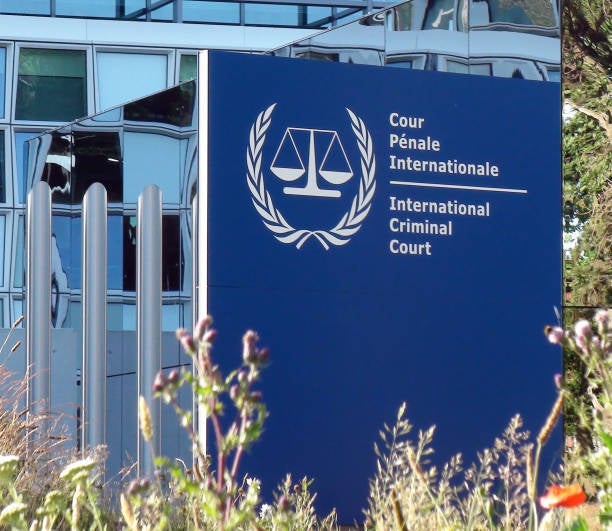
INTERNATIONAL COURT OF JUSTICE
The International Court of Justice (ICJ) is the principal judicial organ of the United Nations. It was established in 1945 by the Charter of the United Nations and began work in 1946. The seat of the Court is at the Peace Palace in The Hague, Netherlands. Of the six principal organs of the United Nations, it is the only one not located in New York.
Prime Law Firm has experience handling matters involving international law and the International Court of Justice. Our attorneys can assist clients who are involved in disputes with foreign governments, international organizations, or other parties with international legal matters.
STRUCTURE OF THE COURT
The ICJ is composed of 15 judges who are elected to nine-year terms of office by the United Nations General Assembly and the Security Council. These organs vote simultaneously but separately. In order to be elected, a candidate must receive an absolute majority of the votes in both bodies.
The Court may not include more than one national of the same State. Furthermore, the Court as a whole must represent the main forms of civilization and the principal legal systems of the world. The members of the Court are independent judges, not representatives of their countries. They cannot hold any other post or act as counsel.
In addition to the regular judges, parties may appoint ad hoc judges (also called national judges) to sit in a particular case if the Court does not include a judge of their nationality on the bench. The President and Vice-President of the Court are elected by the members of the Court every three years.
FUNCTIONS OF THE ICJ
The Court has a dual role: to settle, in accordance with international law, legal disputes submitted to it by States; and to give advisory opinions on legal questions referred to it by authorized United Nations organs and specialized agencies.
Only States may apply to and appear before the Court. The Court has jurisdiction to entertain a dispute only if the States concerned have accepted its jurisdiction. In addition to its contentious function (deciding disputes between States), the Court also has an advisory function: it may give advisory opinions on legal questions at the request of any United Nations organ, specialized agency, or other body authorized to make such a request.
JURISDICTION AND CASE INITIATION
There are three ways in which a State may accept the jurisdiction of the ICJ:
- By concluding a special agreement, known as a "compromis," to submit a specific dispute to the Court;
- By virtue of a jurisdictional clause, i.e., typically, when they are parties to a treaty containing a provision whereby, in the event of a disagreement over its interpretation or application, one of them may refer the dispute to the Court; or
- Through the reciprocal effect of declarations made by them under the Statute whereby each has accepted the jurisdiction of the Court as compulsory in the event of a dispute with another State having made a similar declaration.
Cases may be submitted to the Court by means of a written application addressed to the Registrar. The proceedings consist of two phases: written (memorials, counter-memorials, and possibly replies) and oral proceedings (public hearings). After the oral proceedings, the Court deliberates in private and then delivers its judgment at a public sitting.
PROCEEDINGS AND PROCEDURE
There are two ways to initiate contentious proceedings before the Court: either by the notification of a special agreement or by the filing of a written application. A special agreement is an agreement concluded by both parties to a dispute to submit it jointly to the Court. An application is a unilateral act submitted by one party to a dispute.
Written proceedings consist of the communication to the Court of memorials, counter-memorials and, if necessary, replies and counter-replies. The oral proceedings consist of the hearing by the Court of agents, counsel, and advocates, as well as witnesses and experts. After the oral proceedings, the Court deliberates in private and then delivers its judgment at a public sitting. The judgment is final and without appeal.
PROVISIONAL MEASURES AND SPECIAL PROCEDURES
Pending the final decision, the Court has the power to indicate any provisional measures which it considers should be taken to preserve the respective rights of either party. The Court may also indicate provisional measures of its own initiative.
Before the Court can take up the merits of a case, it may have to deal with preliminary questions, such as objections to its jurisdiction or to the admissibility of the application. These are raised by the respondent as preliminary objections. The parties may also agree to join the proceedings on preliminary objections to the merits. In special circumstances, where the examination of the preliminary objections is closely linked to the merits, the Court may join the preliminary objections to the merits.
ADVISORY OPINIONS
The advisory function of the Court is open to five United Nations organs and 16 specialized agencies of the United Nations family. The General Assembly, the Security Council, the Economic and Social Council, the Trusteeship Council, and the Interim Committee of the General Assembly are the United Nations organs that may request advisory opinions. In addition, certain specialized agencies of the United Nations family are also authorized to request advisory opinions on legal questions arising within the scope of their activities.
Unlike its judgments in contentious cases, the Court's advisory opinions are not binding. However, certain instruments or regulations can provide in advance that the advisory opinion shall be binding. The advisory procedure of the Court is modeled on that used in contentious proceedings, and the sources of applicable law are the same.
Prime Law Firm can assist clients with matters involving international law, including issues that may come before the ICJ or that involve the application of international law. Our attorneys have experience with international legal matters and can provide guidance and representation in these complex cases.
INTERNATIONAL PRISONER TRANSFERS
The United States has a prisoner transfer program that allows U.S. citizens who are incarcerated in foreign countries to serve their sentences in the United States, and allows foreign nationals who are incarcerated in the United States to serve their sentences in their home countries. The legal authority for this program is found in 18 U.S.C. §§ 4100-4115.
The United States entered into its first treaty for the transfer of prisoners with Mexico in 1976. Since then, the United States has entered into prisoner transfer treaties or agreements with more than 80 countries. These treaties and agreements allow for the transfer of prisoners between the United States and foreign countries, subject to certain conditions and requirements.
ELIGIBILITY FOR TRANSFER
To be eligible for transfer under the prisoner transfer program, a prisoner must meet the following criteria:
- The prisoner must be a citizen or national of the receiving country;
- The offense for which the prisoner was convicted must also be a criminal offense in the receiving country;
- The prisoner must have a minimum amount of time remaining on their sentence; and
- Both the sending and receiving countries must consent to the transfer.
In addition to these general criteria, the specific treaty or agreement between the United States and the foreign country may impose additional restrictions on transfers. For example, some treaties may not allow for the transfer of prisoners who are serving sentences for certain types of offenses.
TRANSFER PROCESS
The process for transferring a prisoner begins with a formal request for transfer, which must be submitted to the appropriate authorities in both the sending and receiving countries. In the United States, the Bureau of Prisons (BOP) is responsible for processing requests for the transfer of foreign nationals out of the United States, while the International Prisoner Transfer Unit (IPTU) of the Department of Justice is responsible for processing requests for the transfer of U.S. citizens into the United States.
After the request for transfer is submitted, the BOP or IPTU will review the request to determine whether the prisoner is eligible for transfer and whether the transfer is in the best interests of the United States. The approval rate for transfer requests is approximately 36-41%, meaning that a significant number of requests are denied.
If the transfer request is approved, the prisoner will be transferred to the receiving country to serve the remainder of their sentence. The receiving country will then be responsible for administering the sentence in accordance with its own laws and regulations.
WHY STATES USE THESE MECHANISMS
Countries enter into prisoner transfer treaties for a variety of reasons. For the sending country, a prisoner transfer can reduce the cost of incarcerating foreign nationals and can help to ease overcrowding in prisons. For the receiving country, a prisoner transfer can allow citizens who are incarcerated abroad to serve their sentences closer to their families and in a more familiar cultural and linguistic environment.
For the prisoner, a transfer can be beneficial because it allows them to serve their sentence in their home country, where they are more likely to have access to family support and rehabilitation programs. However, the transfer process can be complex and time-consuming, and not all requests for transfer are granted.
Call our office today at (833) 388-7044 or complete the convenient online contact form to set up a consultation.